
Dropdown
DATE
October 24, 2025
AUTHOR
Paulina Kuchta-Leśniak
CATEGORY
Development
READING TIME
5 min


I often get asked: “Why create art with code? Can’t you just design it in Illustrator?” Of course, I can. But that’s not the point.
I don’t create to reproduce a perfectly planned image. For me, code is a language of expression - one that allows my vision to evolve throughout the process. I usually start with a general idea, a sense of direction, but I never really know what the final result will look like.
And that’s exactly what fascinates me. I begin with a small idea and then, layer by layer, develop it by adding new elements. And later the results often surprise me - and that’s the beauty of it.
I love that moment when tiny variations create something unique, something that can’t be repeated. That’s the essence of the creative process for me - not full control, but discovery. The fact that a single piece of code can generate an infinite number of unique artworks still feels magical every time.
When I first started exploring code and art, I was barely aware of something called generative art. But to be honest - at that time, I didn’t really understand what it meant.
In my head, it came down to a simple equation: Generative Art = Randomness.
Of course, randomness is part of it - but only a small one. Over time, I realized that generativity is something much deeper: it’s a way of thinking about the creative process - about the relationship between the system, the artist, and unpredictability. It’s also about understanding why something happens, not just noticing that it looks cool.
For me, the real value of generative art lies in that constant questioning - in asking myself things like:
– Is what I’m creating truly generative art?
– What role do I play, and what role does the system play?
– What would happen if I gave even more control to the code?
In the beginning, I came across many different definitions of generative art. Some described it broadly - as any creative process based on systems and rules, not necessarily digital. Others focused purely on computers, algorithms, and code as the main medium of expression. Both perspectives are valid - they just look at the concept from different angles.
For the purpose of my own work and experiments, I created my own understanding of generative art, combining elements from various sources and personal experience:
Generative art focuses on creative coding - creating through code, where the computer program has a certain degree of autonomy.
It merges the system’s decisions (based on a set of rules and algorithms) and elements of randomness with the artist’s creativity, resulting in unique, one-of-a-kind visual works.
In my view, generativity is built on four main pillars:
- Set of rules – the logical foundation of the process. It defines the boundaries and structure of the system while leaving room for unpredictability.
- Artist’s creativity – the way I design the rules and parameters. I decide where control ends and experimentation begins.
- System autonomy – the moment when the code starts operating independently, generating outcomes I didn’t plan for.
- Randomness – the element that gives the work its character and life. Because of it, every result is different - and therefore unique.
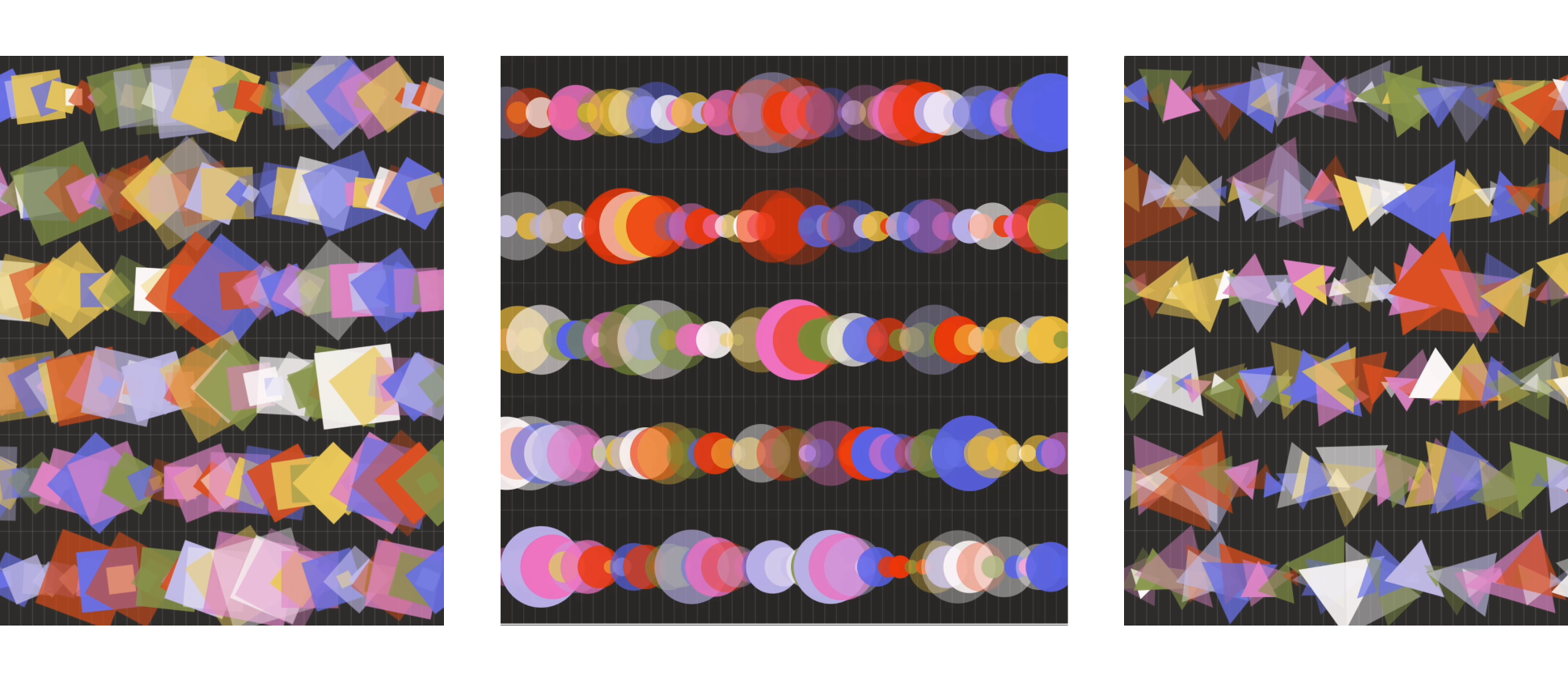
In my experiments, I often start with a grid - I treat it as the base structure, the element from which everything begins. It’s a simple framework that gradually transforms into something much more organic.
1. I usually begin by creating a dynamic grid that reacts to parameters and changes over time.
2. Then I add basic shapes - points, lines, rectangles - that form the first layers of the composition.
3. Next comes the stage of experimenting with transformations: scale, opacity, rotation, and color.
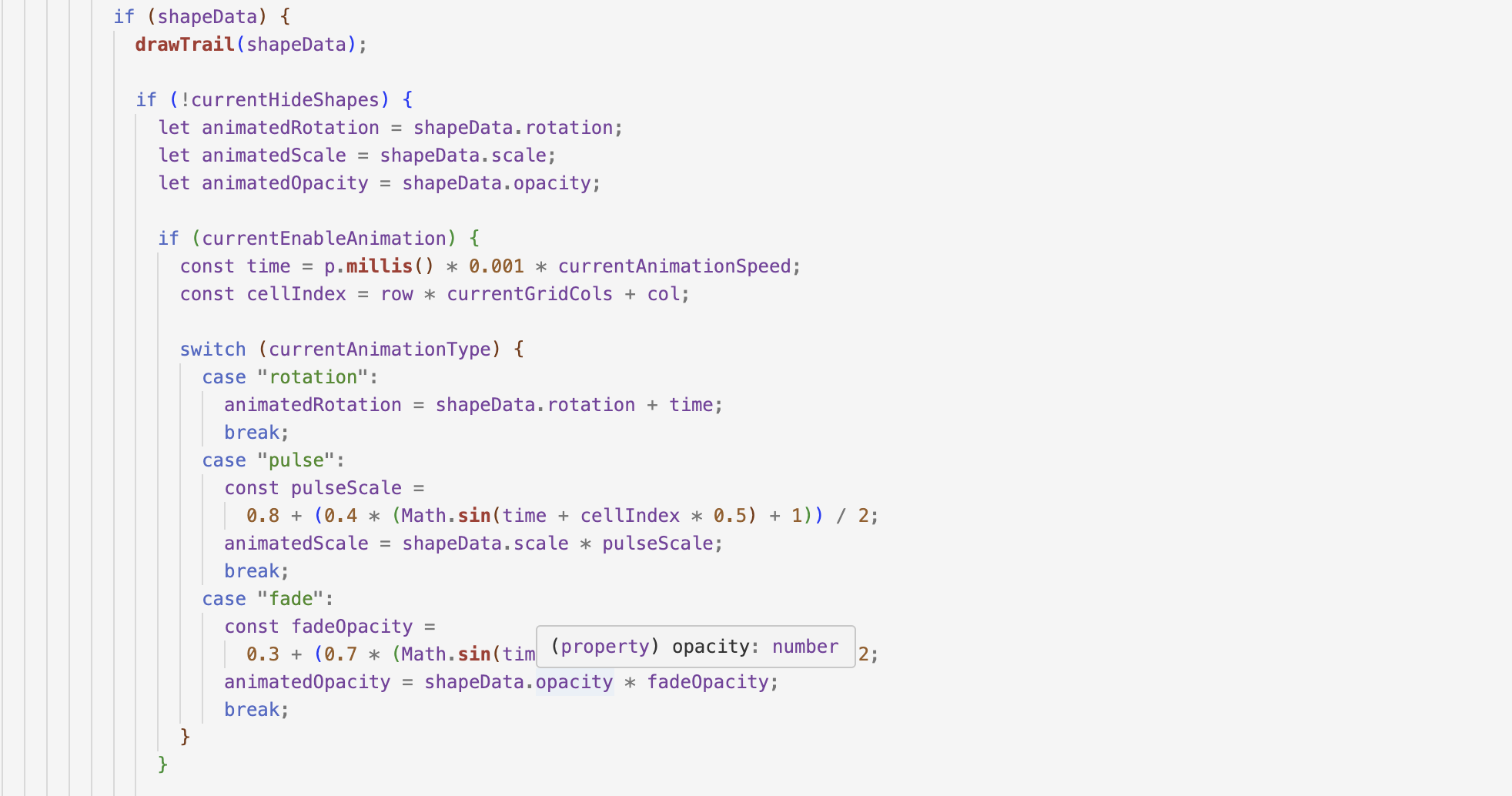
4. After that, I introduce motion - pulsing, waving, rotation, or repetitive sequences - which gives the whole piece energy and lightness.
5. Finally, I adjust the parameters, observing how even the smallest changes can affect the entire system.
This is the most exciting moment for me - when the code starts responding to my decisions and generating outcomes I didn’t plan for. That’s when I feel I’m truly creating in dialogue with the system, not just controlling it.
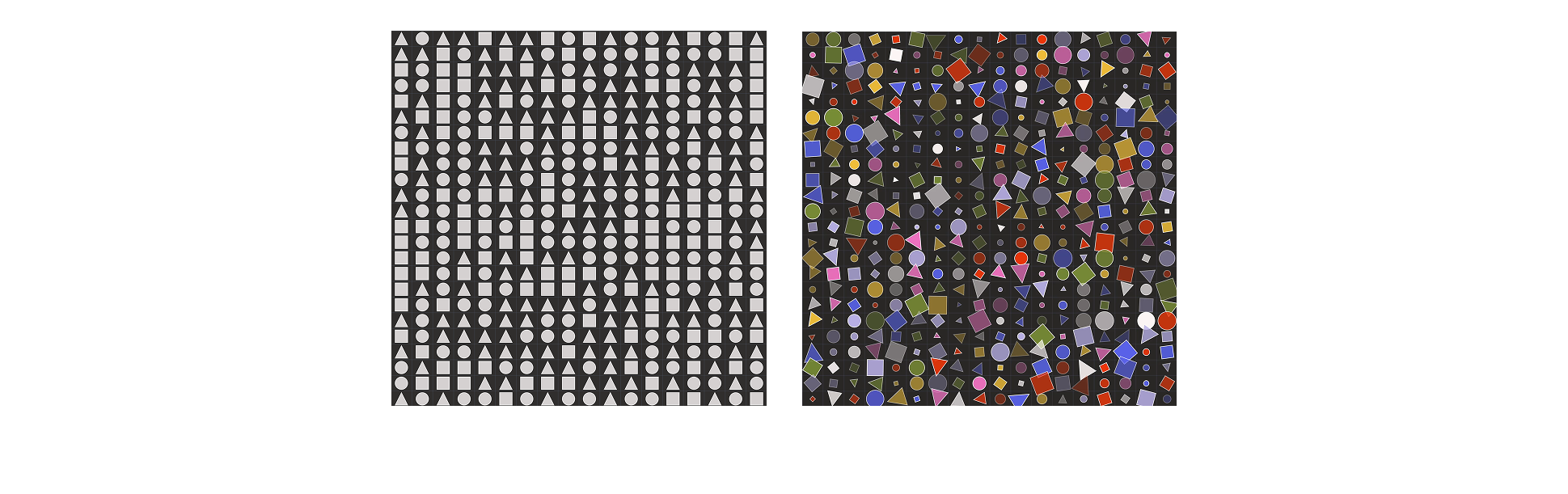
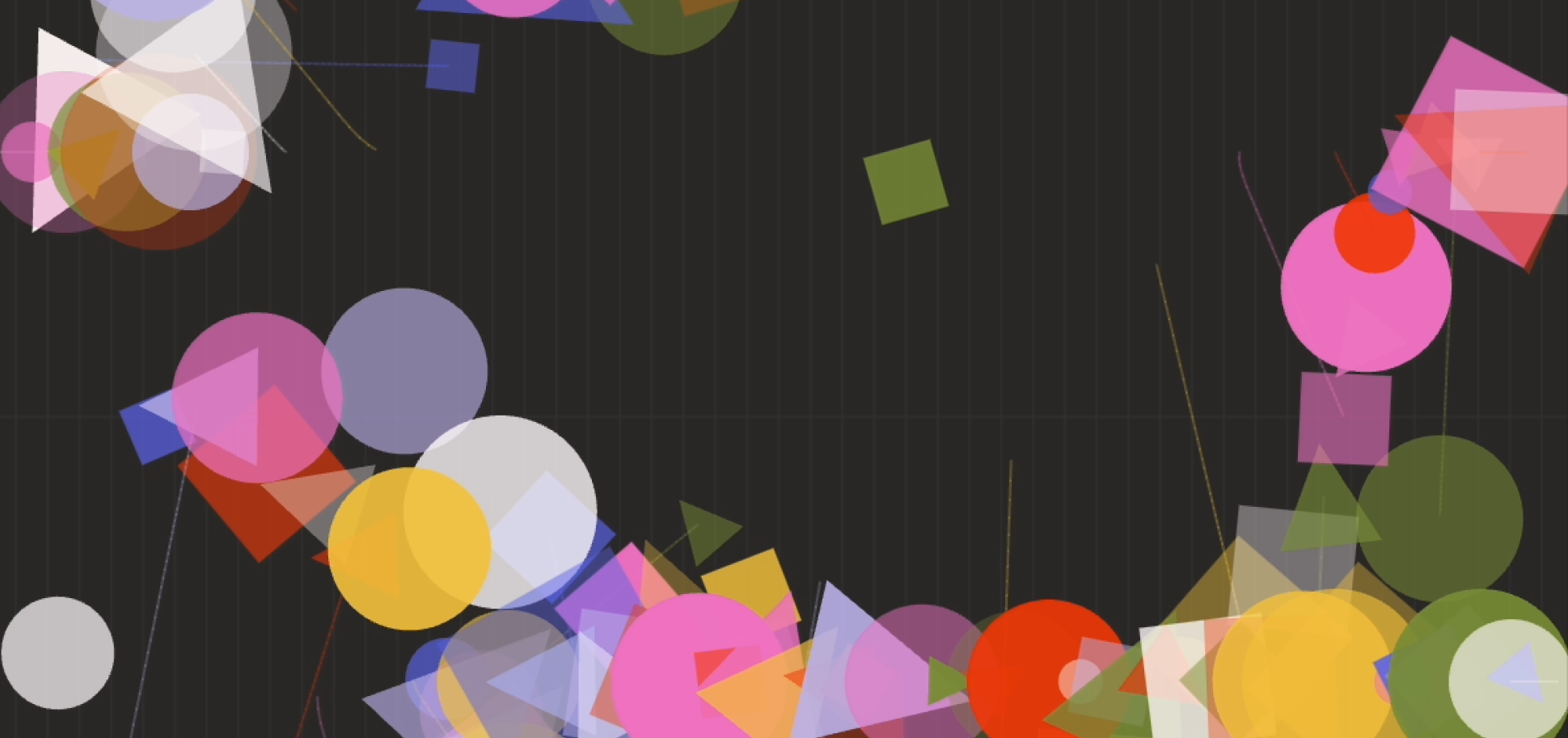
Sometimes I like to see what happens when a static composition starts to move. By experimenting with motion, I bring even more energy and unpredictability into the process.
In this case, I added parameters such as velocity and radius, along with bouncing effects for the shapes. I started moving my mouse across the screen and watching how the system reacted - every interaction created a completely new composition.
The result was surprising: smooth, organic visuals that looked as if they had their own rhythm and pulse.
Later, I introduced trails - subtle tails left behind by the moving shapes. At that point, the code started to literally draw on the canvas, leaving traces like Crayola crayons - but in a completely new, generative way.
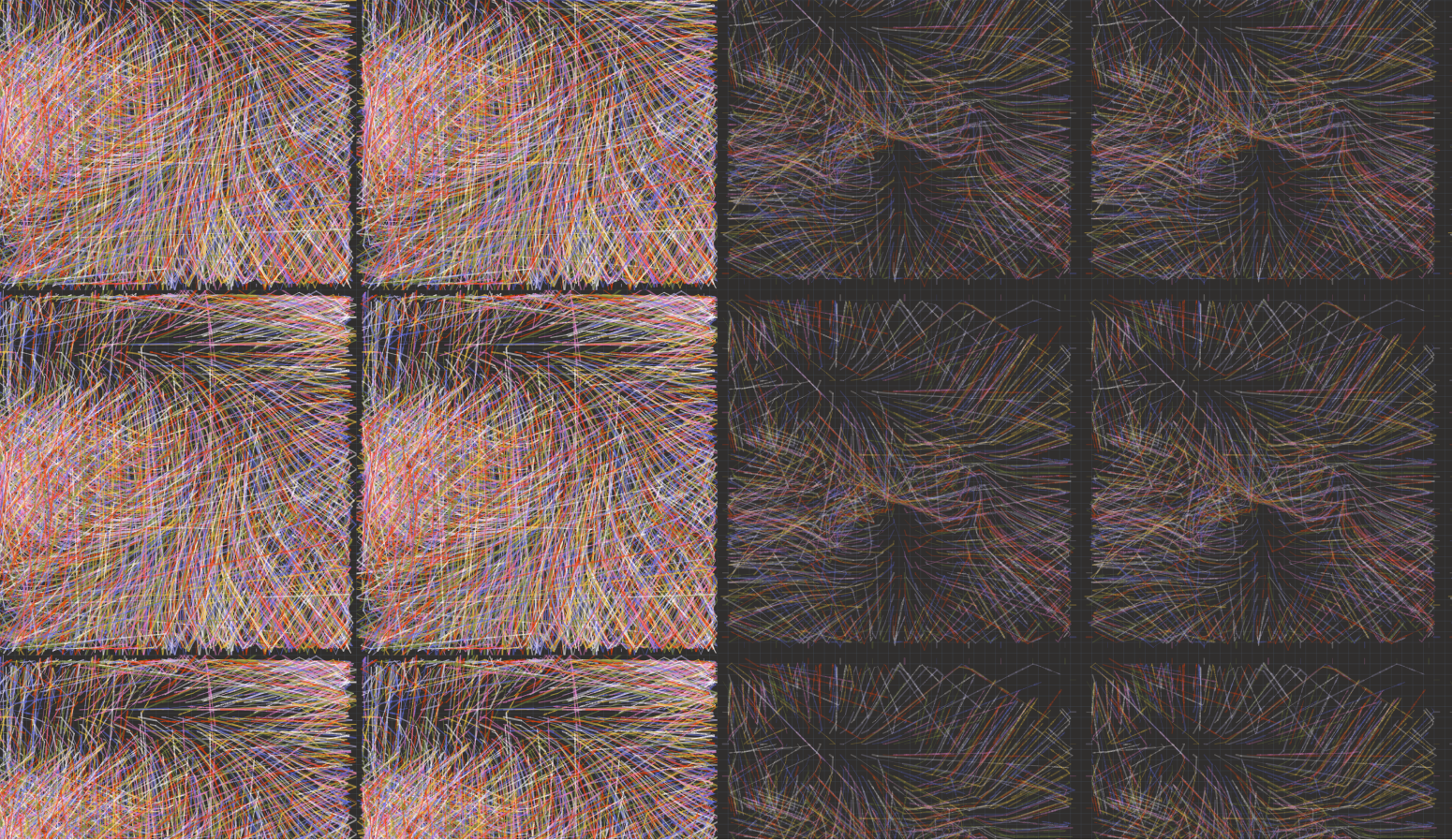
I believe that experimenting with generative art holds enormous potential and truly unlocks creativity. We create a set of rules, and the code interprets them - and suddenly something happens that exceeds our expectations.
Over time, I also started experimenting with the combination of generative art and typography, which opened up a completely new creative field for me - one I’ll definitely keep exploring and writing about, because that’s where I feel something truly special begins.
To wrap up, I’d like to leave a few thoughts for those who want to give it a try:
- Start with simple tools. I recommend Processing or the web-based p5.js. Even without any coding experience, you’ll find plenty of great tutorials and a very supportive community.
- Begin with small ideas. Big, complex visions can often feel overwhelming if you’re not yet sure how to achieve them. Break your project into smaller steps - it helps you learn faster and see progress more clearly.
- Show your work. Even if it feels basic to you, share it. Sometimes the simplest things create the strongest impact.
- Find your focus. Maybe it’s shapes, motion, 3D, typography, or color. Whatever truly fascinates you will guide you further.
And remember - generative art isn’t just about code and rules. It’s a mindset: being open to the process, to mistakes, and to the unexpected.
- Mansion, M. (2023, August 9). On Algorithmic art - creative Pinellas. Creative Pinellas. https://creativepinellas.org/magazine/algorithmic-art/
- Generative Art: 50 Best Examples, Tools & Artists (2021 GUIDE) — AIArtists.org. (n.d.). AIArtists.org. https://aiartists.org/generative-art-design
- Zhang, Y., & Funk, M. (2021). Coding art: The Four Steps to Creative Programming with the Processing Language. Apress.
- What is Generative Art? (2024, October 15). https://avantarte.com/insights/guides/what-is-generative-art
- Dmitri Cherniak - Collaborations with Avant Arte. (2024, June 1). https://avantarte.com/artists/dmitri-cherniak
- https://library.fiveable.me/art-and-technology/unit-11/principles-generative-art-algorithmic-design/study-guide/7WzRMoPXOROCu3Hz. (n.d.).
- Greenfield, G. (2012). Generative art: a practical guide using Processing, by Matt Pearson. Journal of Mathematics and the Arts, 6(4), 225–229. https://doi.org/10.1080/17513472.2012.742030
- Zafeiriou, S. (2024, December 12). Generative Art for Beginners: 10 Essential Techniques | Steve Zafeiriou. Steve Zafeiriou. https://stevezafeiriou.com/generative-art-for-beginners/
- Goodchild, A. (2024, May 22). What is Generative Art? — Amy Goodchild. Amy Goodchild. https://www.amygoodchild.com/blog/what-is-generative-art


